
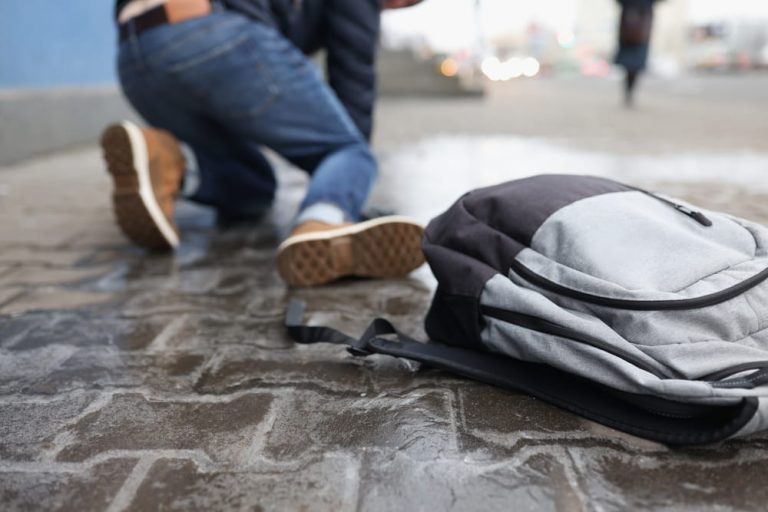
You take one step, then suddenly hit the pavement before realizing the sidewalk was unsafe. As pain sets in, you may wonder who should be responsible. After an NYC sidewalk accident, you may be able to pursue compensation, although the liable party is often an abutting property owner rather than New York City.
Responsibility depends on who had the legal duty to maintain the sidewalk. NYC law generally places that duty on most abutting property owners, with limited exceptions. Our NYC slip and fall lawyer can determine whether a property owner, New York City, or another party may be legally responsible for your injuries and explain your legal rights.
Table of Contents
- Determine Who Controlled the Sidewalk
- Preserve Evidence Before the Defect Changes
- Avoid Deadline and Settlement Mistakes
- How Can an NYC Slip and Fall Lawyer Help
- Frequently Asked Questions
Determine Who Controlled the Sidewalk
Identify the Property Next to the Defect
Begin by identifying the structure, parcel, enterprise, dwelling, or government property adjacent to the defect. The adjacent property is important since the City of New York frequently transfers the obligation to maintain the sidewalk to property owners. One or more of the following may be liable: the property owner, the landlord, the tenant, the property manager, the contractor, or the City of New York. The residential exception can determine if the City of New York can be a defendant.
Confirm Whether City Notice Rules Apply
Filing a lawsuit against NYC is not the same as filing a lawsuit against a private business. Generally, the City will not be liable for defects on its sidewalks unless prior written notice is given under the NYC Administrative Code § 7-201. Evidence of notice may include records from the DOT, 311 calls, repair requests, inspections, acknowledgments, and reports of previous injuries. If there is no kind of written notice, the City will deny liability.
Preserve Evidence Before the Defect Changes
Photograph the Sidewalk and Surrounding Area
Sidewalk conditions can change quickly due to repairs, inclement weather, cleanup efforts, construction, or actions taken on a property. Capture images of cracks, holes, raised slabs, ice, snow, obstruction debris, poor light, and obstruction. Take distance photos that show the location and close-up photos that show measurement in length, depth, height, and placement of the sidewalk condition. Include in your photos addresses, storefronts, curb cuts, tree wells, cellar doors, signs, and any other landmark.
Collect Witness, Medical, and Report Records
You need to show the risk and the injury to have a sidewalk fall case. You should have the following: witness names and phone numbers, reports, records, and notes. You should also have pay stubs, letters from the employer, notes from the employer, forms, and other records. You should also have proof of medical expense loss and pay loss from the start.
Avoid Deadline and Settlement Mistakes
File Public-Entity Notices on Time
Claims against public entities can be filed under expedited procedures compared to standard injury claims. A claim under New York General Municipal Law (GML) § 50-e must be filed within 90 days after the event that gives rise to the claim. GML § 50-i allows 1 year and 90 days to file a claim for certain actions by New York City. A personal injury claim involving private property may be subject to different filing requirements.
Evaluate Injuries Before Accepting Settlement
Injuries that occur from sidewalk accidents can result in broken bones, concussions, and back, knee, shoulder, and wrist injuries, and even long-term issues with movement and dexterity. Since the settlement value can be affected by the above injuries as well as the cost of treatment, lost income, future medical treatment, level of pain, reduced earning capacity, and the physical and psychological effects of the injuries, you should wait for a comprehensive evaluation of all these factors. Before resolving an insurance claim, you should understand how much the at-fault party may pay and what coverage is available.
How Can an NYC Slip and Fall Lawyer Help
Find the Correct Defendant and Coverage
We can investigate who controlled the sidewalk. That may include the City, property owner, tenant, contractor, manager, or maintenance party. Legal help may include property searches, sidewalk records, 311 history, DOT records, leases, inspections, and insurance review. Identifying all liable parties can affect claim value and available compensation.
Prove Negligence, Damages, and Claim Value
The lawyer can assist you in proving that the sidewalk was dangerous, and that the responsible party acted unreasonably. Pictures, measurements, videos, testimony, medical expenses, expert opinion, weather reports, and repair records can be used as evidence. The compensation for these damages could include your medical bills, loss of work, future medical care, loss of earnings, pain and suffering, and other damages. Getting an attorney as soon as possible can protect your legal rights and can help you collect evidence before it is lost or hidden by repair crews or other factors.
Frequently Asked Questions
Can You Sue NYC After a Sidewalk Fall?
Yes, but only in certain situations. Many NYC sidewalk claims are brought against the abutting property owner, not the City. A City claim may require proof of responsibility and prior written notice. The correct defendant depends on ownership, control, maintenance duties, and the defect location.
Who Is Responsible for NYC Sidewalk Maintenance?
NYC law generally makes abutting property owners responsible for safe sidewalk maintenance. The main exception involves certain owner-occupied one-, two-, or three-family homes used only as residences. That exception may leave the City involved in some cases.
What Evidence Helps Prove a Sidewalk Fall Claim?
Helpful evidence may include photos, videos, witness statements, measurements, medical records, incident reports, repair records, and prior complaints. 311 records, weather reports, insurance letters, and wage proof may also matter. The strongest evidence is often collected before the defect is repaired.
What Compensation May Be Available?
Compensation may include medical expenses, lost wages, future care, reduced earning ability, pain, and injury-related losses. Value depends on negligence, liability, injury severity, insurance coverage, documentation, and settlement negotiations. Serious injuries may require a closer review of future damages.
How Long Do You Have to Sue NYC?
Claims against NYC may require a notice of claim within 90 days. Some City actions must be filed within one year and ninety days. Private property claims may follow a different statute of limitations and other timing requirements. Deadlines should be reviewed quickly after a sidewalk fall.